
Fault vs Preventability, and an Update on Lincoln Yards. Hope This Helps 👍🏽
Also, bioremediation, design theory, taste as a measure of intelligence, and frogs in this week's edition of I Hope This Helps👍🏽
Welcome to I Hope This Helps👍🏽, a roundup of tidbits I’ve encountered that furthered my thinking about cities and life. From sustainable transportation, housing, and design to the social forces shaping our daily lives, I take a broad lens in this review. Whether you're a planner, advocate, or just curious about the world around you, I hope you’ll find something here that resonates. Take what helps. Leave what doesn’t.
1️⃣Fault vs Preventability in Crash Assessment
If you’ve ever had the unfortunate experience of being involved in a car accident crash1, then you know that when the police respond, they fill out a crash report that you can typically access online a few days after the crash. If you take the time to look at the report from your crash, make note of how you’re listed in the report. If you’re the first vehicle listed, then you’re probably considered the “at fault” driver. Fault is useful for issuing citations and determining whose insurance is on the hook for the damages. However, for safety sensitive jobs like driving a bus, avoiding fault is not enough.
A bus can do a lot of damage to people inside and outside of the vehicle, so the goal of a bus crash is to not have one in the first place. When a bus driver has a crash, the first question, which is assessed by the police, insurance companies and lawyers is whether or not the driver was at fault. The second question, which is assessed by the transit authority itself, is if the crash was preventable. If there was something that the driver could have reasonably done to stop the crash from happening in the first place, then the collision is deemed preventable and subject to applicable internal policies on preventable crashes.
This assessment of preventability is based on the principles of defensive driving, something that all driver trainings should include.
Defensive Driving (n) - a proactive approach to driving that focuses on anticipating and preventing hazards by maintaining awareness, planning for the unexpected, and using safe driving strategies to avoid collisions.
The key principle of defensive driving are as follows:
Stay Aware - Keep attention on the road, checking mirrors ever 3-5 seconds and observing traffic patterns
Anticipate Hazards - Scan the road ahead for potential hazards and be prepared to react before the situation becomes an emergency
Maintain a Safe Following Distance - Don’t tailgate. Ensure there is enough space between you and the car in front of you to stop if you’re required to. The three second rule suggests you should stay at least 3 seconds behind the vehicle in front of you. To measure your following distance, wait for the car in front of you to pass a fixed object like a pole or a tree. When the vehicle passes it, start counting the seconds2 until you pass that same fixed object. If you don’t get to at least “3 Mississippi,” you’re following too closely. For larger vehicles like buses, three seconds is the floor. For higher speeds, drivers should add 1 second for every 10 mph (ex. - at 50 mph, the goal is a 5 second follow distance).
Leave Yourself and Out - To the extent possible, maintain open space around your vehicle to take evasive action if necessary
Adapt to Conditions - Adjust your speed and driving style for bad weather, heavy traffic, or poor road surfaces
Don’t Rely on Others - Never assume another driver will do the right thing; instead, expect them to make mistakes and prepare to react3
This approach dovetails nicely with a recurring theme on this page:
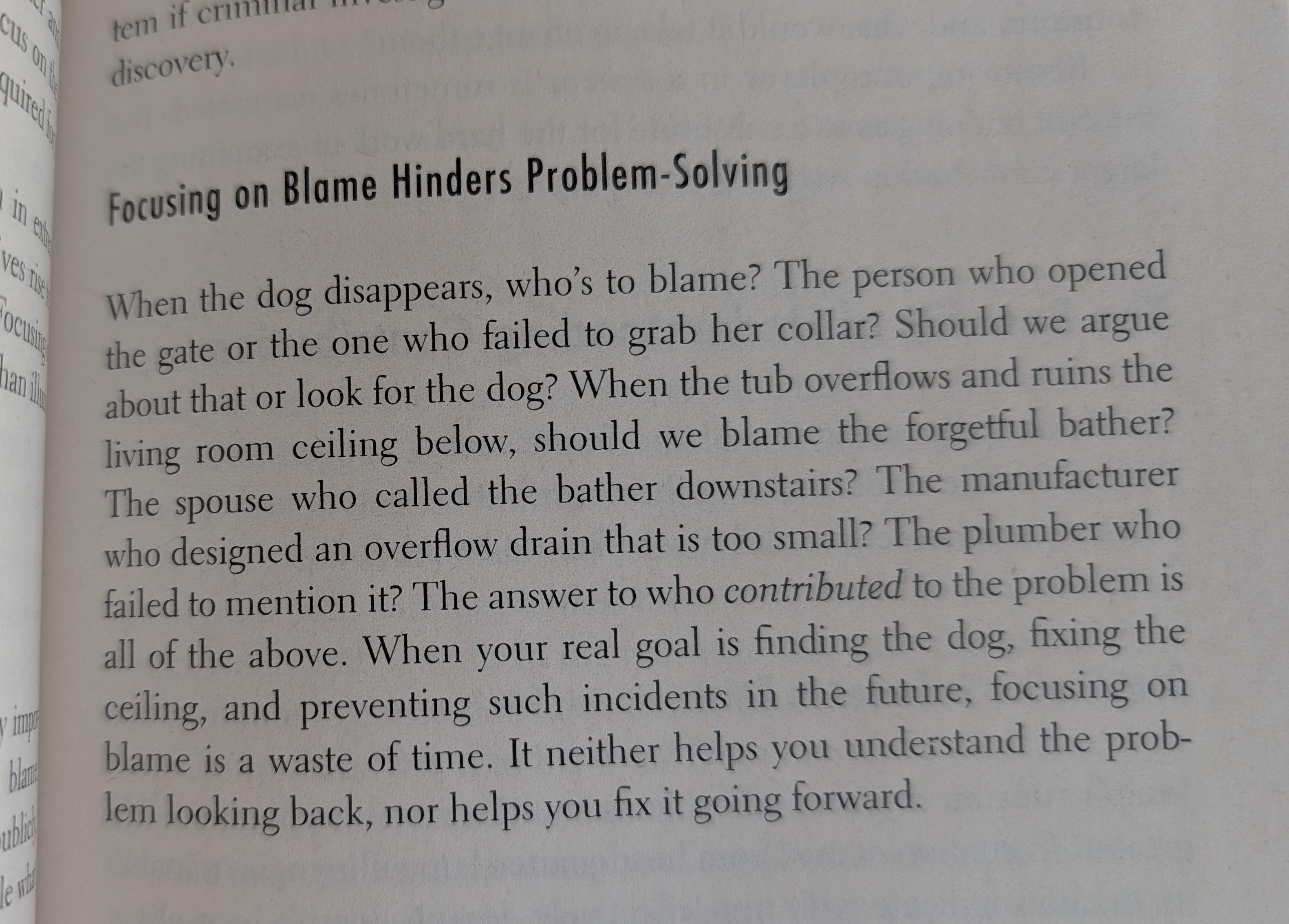
Blame is useless
Fault focuses on who’s to blame for the crash. If you’re not at fault, kudos, but your car is still f*****. Preventability focuses on what could have been done to prevent the crash in the first place. For anyone looking to avoid an expensive game of bumper cars, preventability should be the north star.
2️⃣Lincoln Yards becomes Foundry Park
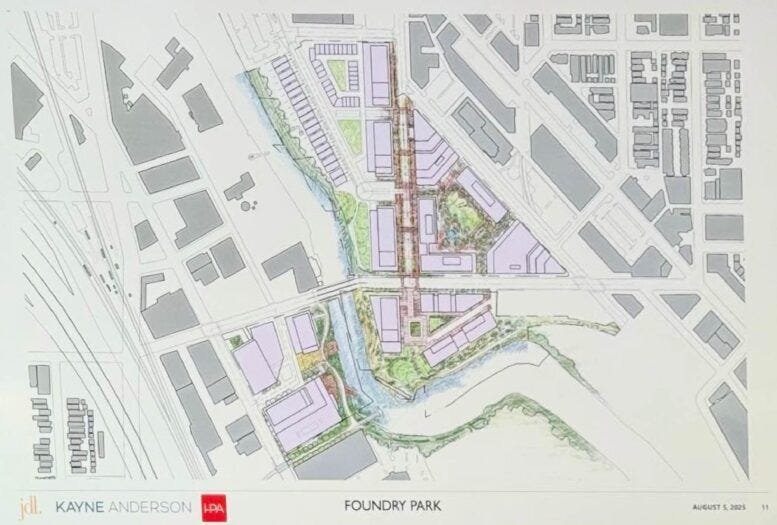
If you’ve been in Chicago for the past decade, you’ve probably heard about Lincoln Yards. This 53 acre megadevelopment along the Chicago River was announced in 2018 by Sterling Bay, and was proposed to include several mixed use buildings, as well as an extension of the 606 trail, a new Metra station, a new public riverwalk, and tons of other quality of life improvements. In 2023, the first structure, a life sciences building was completed. That building is now up for sale. After nearly a decade of on again, off again public subsidy debates and political horse trading, this development appears to be sounding the death knell.
However, like a phoenix rising from the ashes, a new development, dubbed “Foundry Park” has been announced by local developer JDL. This development, centered along an extended Southport Ave, is proposed to included 2,000 to 3,000 new residential units in the form of condos, apartments, townhomes and single family homes. Additionally, the preliminary site plan includes a hotel, retail space, 8+ acres of park space, and an updated riverwalk. While I’m still of the belief that the more resilient approach is to avoid megadevelopments altogether and subdivide the 53 acre site into smaller plots to be developed individually, hopefully, this more grounded development will materialize beyond flashy renderings and grandstanding.
If you would like to learn more about how Lincoln Yards got here, check out this video from the Chicago Like a Local Youtube Channel!
3️⃣Have We Considered Bioremediation?
One of the challenges with Lincoln Yards was the site itself. From 1902 to 2012 it was the site of the A. Finkl & Sons steel mill, the longest running steel mill in Chicago until its demolition in 2012. Because of this history, the site was identified as a heavily polluted brownfield in need of significant environmental remediation to make it safe for people to live there.
Environmental Remediation (n) - the process of removing, reducing, or neutralizing pollutants and contaminants from soil, groundwater, surface water, or sediments to restore an environment to a safe and usable condition
Environmental remediation is an expensive process, involving chemically processing the soil that can be brought to safe levels of contamination, and removing and replacing the soil that cant. Sterling Bay started the remediation process in 2017, wrapping up just before Earth Day in 2021. Although chemical remediation is a common approach to environmental remediation, it’s not the only approach.
Bioremediation (n) - the process of using living organisms—most commonly microorganisms like bacteria and fungi, or sometimes plants—to break down, neutralize, or remove harmful pollutants from soil, water, or air.
Bioremediation is generally cheaper than traditional remediation strategies primarily because it’s slower. Whereas traditional remediation can take weeks to months, bioremediation can take several years. However, given that the site has been sans a steel mill for over a decade with one structure to show for it, time doesn’t seem to be the limiting factor. Plus, any excuse to plant a bunch of trees is always good for a city. Learn about bioremediation in the video below!
4️⃣Designed to Numb from Design Theory
Increasingly, design is focusing on seamlessness above all. The basic logic tracks; if you remove friction from a process, the process becomes more user friendly. However, there’s money to be made here, and companies are well aware. Generally, the more effortless a process, the easier it is for companies to shape our behavior. Think about how many times you find yourself scrolling TikTok without realizing how you even got there. Generally, it’s hard for companies to get people to want more of a product than they actually desire, but if they flatten out the transitions, it’s easier to nudge you into lingering longer than you otherwise would. Check out this video from the Design Theory Youtube channel discussing how designing for convenience above all is flattening experience and chipping away at culture.
5️⃣Taste is the New Intelligence
An Excerpt:
Every platform, every scroll, every second—more inputs, more noise, more things trying to hook your attention. The old metrics of intelligence—who memorized the most, who spoke the loudest, who finished the book first—don’t mean much here.
In an age where AI can generate anything, the question is no longer "can it be made?" but "is it worth making?" The frontier isn’t volume—it’s discernment. And in that shift, taste has become a survival skill.

🚲A Moment for Levity
“I learned early on—don’t take life too seriously. There are things you should take seriously like loving yourself, allowing other people to love you, which is a big one. Most of the other things are really not that serious.”
~RuPaul Charles
Here’s a video about frogs because it made me happy.
📚 Explore My Bookshop Wishlist
If you enjoy my writing and want to support it in a small but meaningful way, consider buying me a book from my Bookshop.org wishlist. It’s a curated list of what’s been shaping my thinking — and every purchase supports independent bookstores too.
https://crashnotaccident.com/
1, Mississippi, 2 Mississippi, 3, Mississippi….
This also applies well to riding a bike. Assume nobody sees you, and if you have a crash, expect the police to corroborate the driver’s story that you “came out of nowhere” (even if you’re wearing bright clothes in a bike lane in the middle of the day).
Very interesting tidbit on bioremediation! I've never heard of it before (although I guess I most certainly have seen examples) but it sounds like a great way to cost effectively work through some hurdles.