
😈The Corruption Track: Understanding Power in a Time of Political Sepsis
After nearly a decade working in urban planning, I've surmised power, more than policy, lies at the heart of our deepest dysfunctions. Let's talk about it

Quick Announcements
Thank you to whoever bought me my first book from my Bookshop.org wishlist! Expect to see excerpts from Messy Cities: Why We Can’t Plan Everything woven into my content in the near future. I’m particularly excited because it’s a book of essays, so I’ll cover some ground. Thank you again!
If you have links to any of my articles saved outside of Substack, you’ll probably find the link is broken. I updated my website url and it killed all of the old links. All of my past articles are still available in my archive, you’ll just need a fresh link. Sorry for any headache this causes
Now, to power.
Instead of addressing the root of these problems political power brokers find the “solution” that polls the best or masks the most pronounced symptoms, leaving the underlying problem to fester. Let’s call this political sepsis. Until we can address political sepsis, I’m not sure we’ll be able to see housing affordability…or good governance at all.
Me, in an article about zoning, of all things
I talk around the fair use of authority a fair amount on this page, mostly in advocating for sound policy decisions. Now, I think it’s due time I take a stab at what lies at the center of authority. Power.
What is Power?
Power (n) - The capacity to compel one or many into acting or behaving in a certain way.
Power is an inescapable force that governs how we engage with the world around us. However, whereas gravity is a natural force created by the Earth itself, power is a social force. Most of the power that shapes our lives today1 is generated and brokered by people, and the institutions they build. People, with diverse intentions, altruistic and otherwise see the potential boodle to be gained from manipulating power, so they work to understand it. This bisects the population into two groups
those trying to broker power
those having power brokered over them.
Fortunately, being downstream of a power broker, even a malicious one, is not an intrinsically bad position. From this vantage point, you get a case study in how and why power is leveraged, and what assumptions are made in maintenance of that power. By watching quietly, you start to pick up a key building block of power; information.
Being downstream of a broker becomes a huge problem if you can’t notice when power is being leveraged, and if they’re any good at dealing in power, they’re probably trying to hide it, actively or subconsciously.
Types of Power
💪🏽Physical Power
The ongoing series “The Siege of Chicago” documenting ICE activity in the city, offers a view of one of the most carnal forms of power, physical power.
Physical power is the use of force to compel one or many into or behaving in a specific way. Although we’re currently seeing this power being utilized by the highest forms of government2, public displays of physical power are relatively uncommon. Physical power is often used in response to (or to create) flashpoints, or in endgames, but since it’s amongst the most visible and emotionally visceral forms of power to watch, physical power is typically only employed sparingly by people and institutions attempting to maintain power. The optics are awful, and in an attention economy, optics carry a lot of power.
Asserting physical power over someone is also just plain bad, but that’s a moral statement. Power doesn’t really care about morals. Power is just easier to broker when it looks moral
Since the actions documented in “The Siege of Chicago” involve the government exerting power, they also represent an example of Institutional Power
🏦Institutional Power
Institution (n) - An organization, system, or practice, often man made, that plays a significant role in the structure or functioning of society
Institutional power is when an institution uses its vested authority to compel individuals to make a decision, or when an institution makes a decision on behalf of its constituents that they can’t reasonably opt out of. Taxes and zoning are examples of institutional power, for better or for worse.
Some level of institutional power is necessary for any institution to carry out its core functions. Governments need to collect taxes if they’re expected to deliver public services. Companies need to establish internal policies that align with their sincere business need. However, institutional power is ultimately administered by people, and people are subject their own incentives and agendas. This excerpt from Don’t Make No Waves…Don’t Back No Losers, a 1975 analysis of Chicago machine politics provides insight on how and why institutional power is coopted for individual gain.
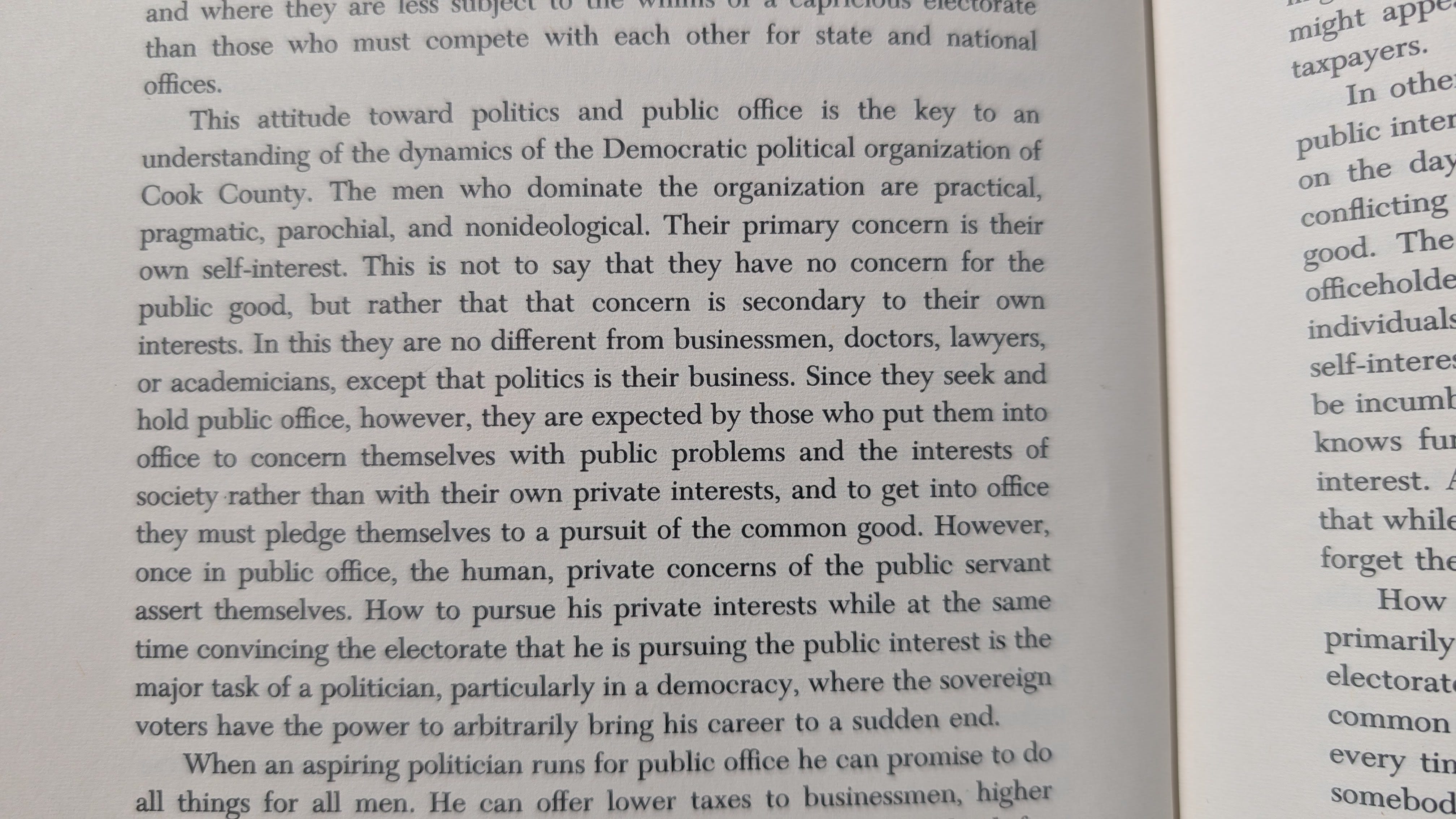
Chicago is entering budget season, which affords another arena to observe institutional power at play. Chicago residents can voice their opinions about the budget, but ultimately, the final decision is vested in the mayor’s office, with the city council’s approval.
The 2026 budget proposal from the mayor’s office aims to close a $1.2B budget gap, up from $982M last year. During last year’s budgeting process, despite pressure to address structural deficits in the city’s budget related to spending growing 50% since 2020, the city opted to close the gap with a slurry of new taxes, and was rewarded with a credit rating downgrade for its trouble3.

The 2026 budget proposal appears to maintain that same aversion to structural spending changes, proposing instead a reinstatement of the corporate head tax that Chicago repealed in 2014, at over 5x the previous rate. Yes budget cuts are hard, but the institutional power vested in the mayor’s office is granted under the assumption that whomever wields it will be a responsible steward of public funds. Sometimes, this involves making unpopular decisions in defense of the overall health of the city. So why does the mayor’s office seem so strongly averse to budget cuts? Let’s look at power.
Unions are powerful institutions in Chicago, and their interests are in keeping union members employed. A healthy share of city employees are represented by unions. The mayor’s largest campaign donor was the Chicago Teacher’s Union, one of the stronger unions in the state.

Control vs Influence
You have control over the things you can determine the outcome of directly. In practice, you are the only thing you have total control over. Everything else you only have influence over. This does not mean that influence is not powerful. Arguably, influence can be more powerful than control. Influence, if strong enough, can get the results of control, with the added advantage of obscuring who’s behind the power.
Influence relies on understanding how people will react to things generally,4 and leveraging those reactions to an end. The internet, more namely its capacity to connect people, thoughts, and ideas from across the globe instantaneously, has supercharged the power of influence, and people that care to broker power are stat maxing.
Want to sell an unpopular policy like a tax increase? Attach an emotional appeal to it, let the internet run for a while and play whatever angle polls the best.
Want to get people stirred up, agitated and confused generally? Flood the airwaves with more information than anyone can possibly process. Keep going if you want them to eventually check out.
Want to seed infighting to divide and conquer? Feed people algorithmic content reminding them who to hate, and who will save them from that evil person. Pretty soon, everybody will be so preoccupied with hating one another that you can do whatever you want.
If any of those scenarios felt vaguely familiar, explore that! It could be your lens into exploring power around you.
“How we live is so different from how we ought to live that he who studies what ought to be done rather than what is done will learn the way to his downfall rather than to his preservation.”
~Niccolo Machiavelli, The Prince
A Lesson from Board Games
When I visit my in-laws, we love playing board games. Lords of Waterdeep, an open ended strategy game set in the Dungeons & Dragons universe is one of our personal favorites. In the game, players take on the roles of secret rulers vying for control of the city of Waterdeep by constructing buildings and completing quests. Both require resources represented by coins and colored cubes that can be collected by landing on spaced throughout the board. For example, if you needed money, you’d probably want to go to Aurora’s Realms Shop and pick up 4 gold pieces.
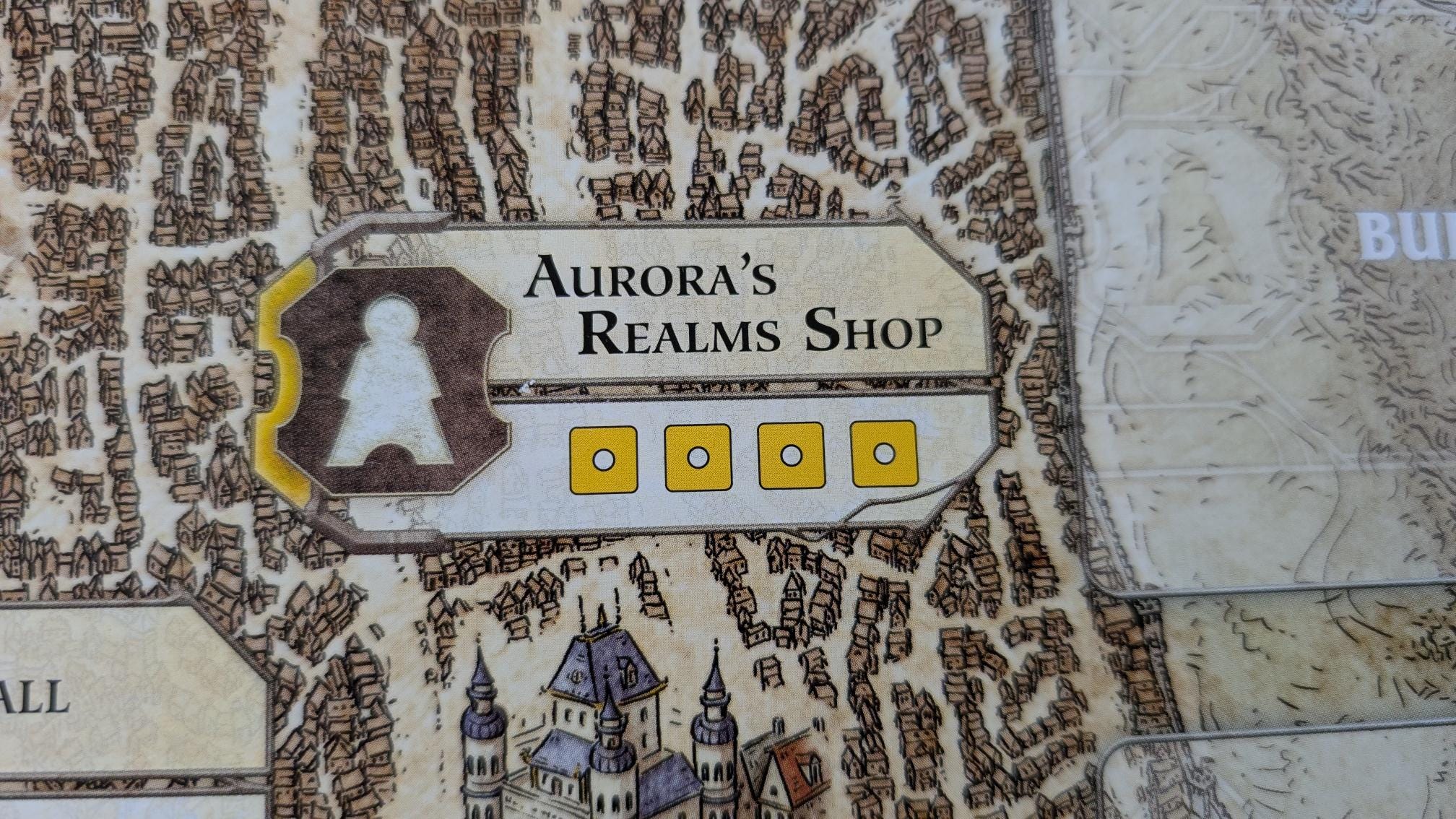
The Scoundrels of Skullport expansion introduced the corruption track. This added spaces like the Hall of The Voice, where a player can pick up 5 gold pieces, as well as a quest card and an intrigue card, which gives you a one-time special ability.
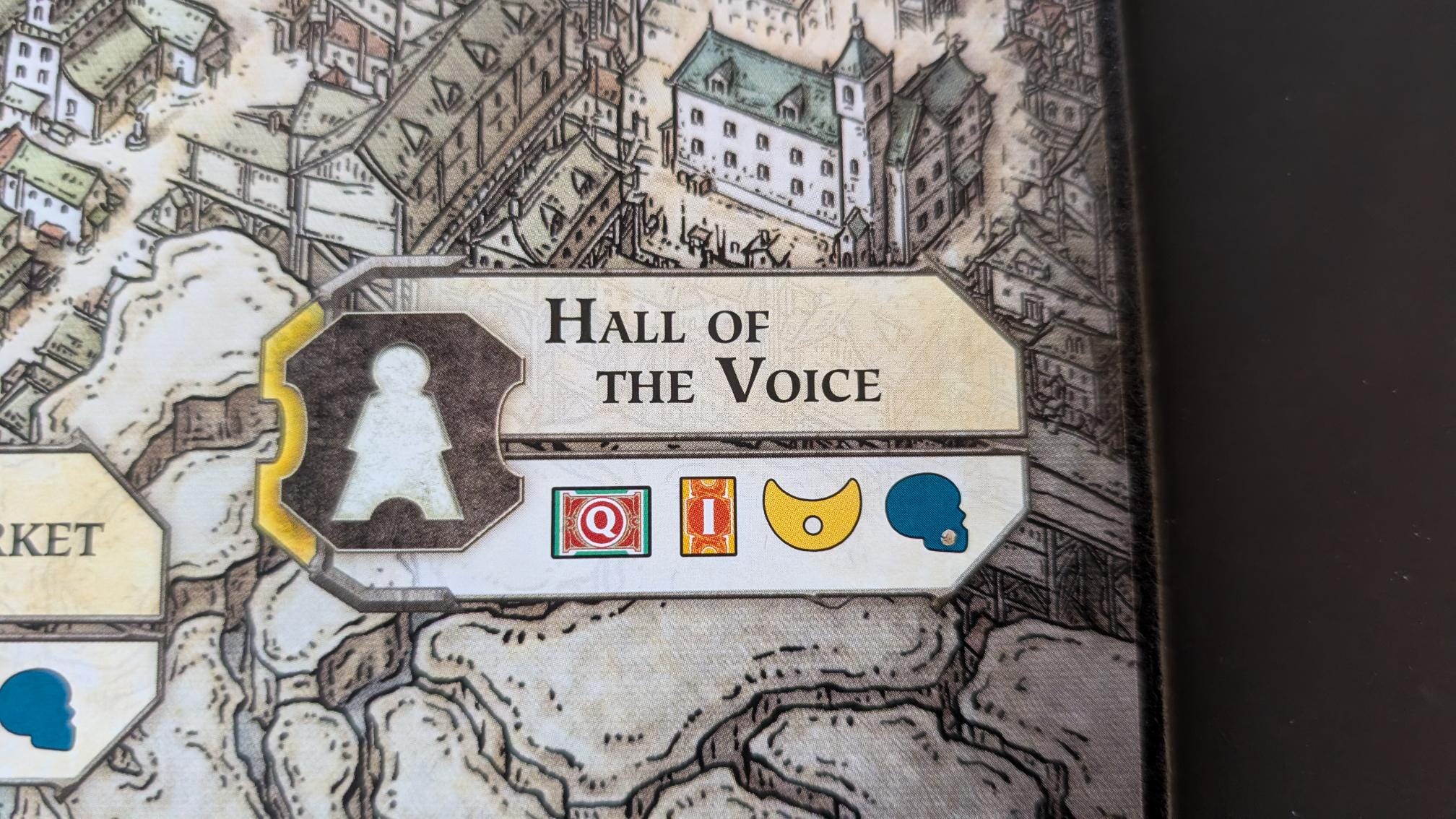
For all of this boodle, the player also has to pick up a corruption point from the corruption track. If not disposed of by the end of the game, these skulls take away from the players final score, based on how many points have been taken from the corruption track, and how many skulls they still have


The corruption track offers a decent analogy for the use of power. If power is used to acquire something already within your reach, there’s nothing to note. Keep playing the game.
If power is used to acquire something beyond your reach, keep playing, but go ahead and pick up a corruption point. You cheesed the system. If you pick up corruption points once or twice, you’ll probably be fine by the end. However, if you make a habit of picking up corruption points without a plan to mitigate them, it’s going to cost you at the end of the game.
With that in mind, let’s close with some themes I’ve noticed from my 29 years of observing power.
Absolute power corrupts absolutely. I know this is a tired adage, but I’ve found it to be true. When people get power, it changes their worldview, sometimes in powerful ways. This can make people think and act in ways foreign to past versions of themselves
Fear is a powerful. People are less likely to defy a person or institution they are afraid of. Even when they do, fear puts people in an emotionally heightened state that handicaps their ability to think rationally. Fortunately, power held through fear is hard to maintain. It creates enemies.
Distractions can be more powerful than fear. Fear creates enemies. Distraction checks people out. If the backdrop of life (real or perceived) gets particularly bleak, what reason do people have to check back in? If you find yourself wanting to make the bold choice to in, app timers are a godsend.
Once people and institutions gain power, they are generally reluctant to cede it. However, when questioned about the power they hold, most people and institutions interested in maintaining power downplay the power they actually have. This keeps expectations low.
Power is always in flux. When a person with power leaves their post, this leaves a power vacuum. Power vacuums never last for long. Somebody is always angling for that seat. In fact, in the immediate aftermath of a power vacuum, it’s always worth scrutinizing whomever was first on the scene to fill it.
📚 Buy me a Book 💚
Thanks for reading! If you enjoy my writing and want to support it in a small but meaningful way, consider buying me a book from my Bookshop.org wishlist. It’s the books that I want to read, but have not quite pulled the trigger yet!
Sure, a bear has the power to kill and eat you, but is that an incredibly relevant concern in day to day life?
Frankly, the audacity has changed, more than the volume
This was followed by a $830M infrastructure bond the doesn’t require the city to start repaying it until 2027 (i.e.- the next mayoral election year)
You don’t need influence over everybody to have significant influence